
A SCOTUS Ruling on Chatrie
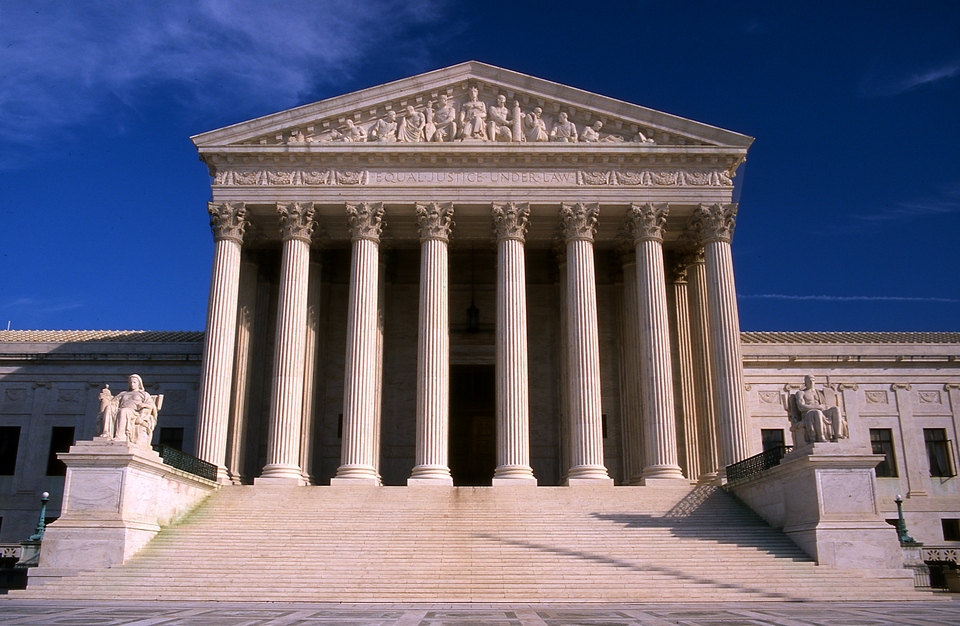
On June 29, 2026, the Supreme Court of the United States held that “reverse” warrants (“Show me all the mobile devices near this spot at this time and date”), commonly known as “geo-fence warrants”, trigger the Fourth Amendment: acquiring cell-phone location data is a search, lawful only when a neutral and detached magistrate finds probable cause and particularity.
“Trigger the Fourth Amendment”
That phrase, ’trigger the Fourth Amendment,’ can be confusing. From a January, 2026 Congressional Research Service Legal Sidebar article (LSB11274) entitled, “Geofence Warrants and the Fourth Amendment”:
In determining whether a particular means of gathering information, such as use of a geofence, constitutes a “search” triggering the protections of the Fourth Amendment, federal courts generally look to whether the government action violates a person’s reasonable expectation of privacy. A variety of considerations inform whether an expectation of privacy is reasonable, but the Supreme Court has held that “a person has no legitimate expectation of privacy in information he voluntarily turns over to third parties.”
The Supreme Court held that, in the Chatrie case, the police officers conducted a Fourth Amendment search when they acquired Chatrie’s location data from Google because “an individual has a reasonable expectation of privacy in his cell-phone location information.”
Chatrie
For several years, a case in Virginia involving a person named Okello Chatrie set the tone and procedure (and arbitrary denials by some data providers like Google). Chatrie’s name was one of three provided by Google as being at or very near the scene of the May 20, 2019 robbery of the Call Federal Credit Union in Midlothian. Police used a geo-fence warrant to identify Chatrie. A district court found this violated the Fourth Amendment, but that ruling bound no other jurisdiction. This decision changes that; as a court of review, the justices left the Fourth Circuit to decide whether each step complied.
A note on the Chatrie Case Investigation
It’s important to note that this case did not involve even a hint of malfeasance by the investigators, who ultimately triaged a list of 19 to three devices in the location at the time of the bank robbery. From all accounts, the officers used standard operating procedures, diligently worked with Google through its three-step process, and followed good practices as were known at the time. The issue was that these procedures were based on interpretations of Fourth Amendment compliance that were incorrect.
A note on data platforms and CSPs
Another issue is that data platforms and cloud service providers like Google and Facebook have been wildly inconsistent and in some cases hypocritical in their approaches to this matter, and have in fact refused to comply (citing cost and complexity) with search warrants that do follow all the terms that SCOTUS just said were required.
In one case in which I was personally involved, in 2025, attorneys for Google flatly refused to honor and produce based on a search warrant that was highly limited in scope, highly particular, and demanded a process that would reduce to only those devices that could reasonably have been associated with users reasonably likely to have been in volved in a homicide, and present in the geo-fence within a window of ten minutes. Despite Google’s public statements that they expected officers to provide particularity and specificity, when faced with a search warrant signed by a county judge that met those requirements, Google demurred and suggested the current method as a “workaround”. In addition to police adhering to these rules, so too must data platforms and cloud service providers.
Digital Exhaust
Mobile devices send to platform providers and app owners small amounts of data every couple of minutes, including the location of the device. This kind of “digital exhaust” can help solve real-world crime, but only when the request is built to survive Fourth Amendment scrutiny. Acquiring a person’s cell-phone location data is a search, even when the data comes from a third-party company and even when it covers only a short period. A search is lawful only when a neutral magistrate finds probable cause and the scope of the search is set out with particularity.
Build every request to meet both tests.
Limit the scope of every request
The particularity requirement, what Black’s Law Dictionary defines as, “the detailed statement of particulars” in a pleading, affidavit, or the like, exists to keep a search “carefully tailored to its justifications” so it does not “take on the character of the wide-ranging exploratory searches the Framers intended to prohibit.” Courts look to the geographic and durational expanse of the search. So:
- Shortest time-span possible. Define the narrowest window that still captures the criminal event. Do not assume a short window cures an overbroad request: the concern is access to the whole of a person’s movements, not only the hours you later choose to review.
- Most limited geographic area possible. Draw the tightest boundary around the scene. A perimeter that pulls in residences, places of worship, and unrelated foot traffic sweeps up people who are not under investigation.
- Most limited data request possible. Ask only for the records that establish the link to the crime. When you already have a suspect, seek that person’s data directly rather than casting a wide net.
Establish probable cause for the place and the data
A magistrate must find a “fair probability” that evidence of the crime will be found in what you search. Show, with specific and articulable facts, both that the targeted data will exist and that it will help identify or convict the offender. Tie the facts of your case to the exact records you seek.
Do not leave scope to officer discretion
Reverse and geofence-style requests gather many devices first, then sift for a suspect. Where a warrant lets officers narrow the field or unmask identities without stated criteria, it provides no judicial check on the officers’ own probable-cause judgments. For each stage that widens the data or reveals identities:
- State in advance the criteria you will use to narrow the list.
- Get a magistrate’s authorization for each expansion, rather than negotiating informally with the provider.
- Document the specific facts supporting each step as it happens.
Bottom line
Be deeply serious about protecting Fourth Amendment rights. Confine each element of the request to a reasonable, specific set of requirements grounded in the facts of your investigation. A narrowly drawn, particularly described, probable-cause-backed request is far more likely to yield admissible evidence and far less likely to be suppressed.
Sources
- Digital Exhaust & Major Crime Investigations, slide 19, by Nick Selby. Licensed CC BY-NC-SA 4.0. No commercial re-use.
- Berris, P. G., & Wild, C. (2026, January 22). Geofence Warrants and the Fourth Amendment. CRS Products (Library of Congress). https://www.congress.gov/crs_external_products/LSB/HTML/LSB11274.html
- “Particularity,” Black’s Law Dictionary, 2nd ed., p. 876.
- Chatrie v. United States (https://www.supremecourt.gov/opinions/25pdf/25-112_0am4.pdf June 29, 2026).
- Crocker, A., & Lynch, J. (2026, June 29). Victory! Supreme Court says Constitution protects people’s location data | Electronic Frontier Foundation. Electronic Frontier Foundation. https://www.eff.org/deeplinks/2026/06/victory-supreme-court-says-constitution-protects-peoples-location-data
- McKenna, A. T. (2026, June 30). Supreme Court rules your cellphone location data is protected by the Fourth Amendment. The Conversation. https://theconversation.com/supreme-court-rules-your-cellphone-location-data-is-protected-by-the-fourth-amendment-286424